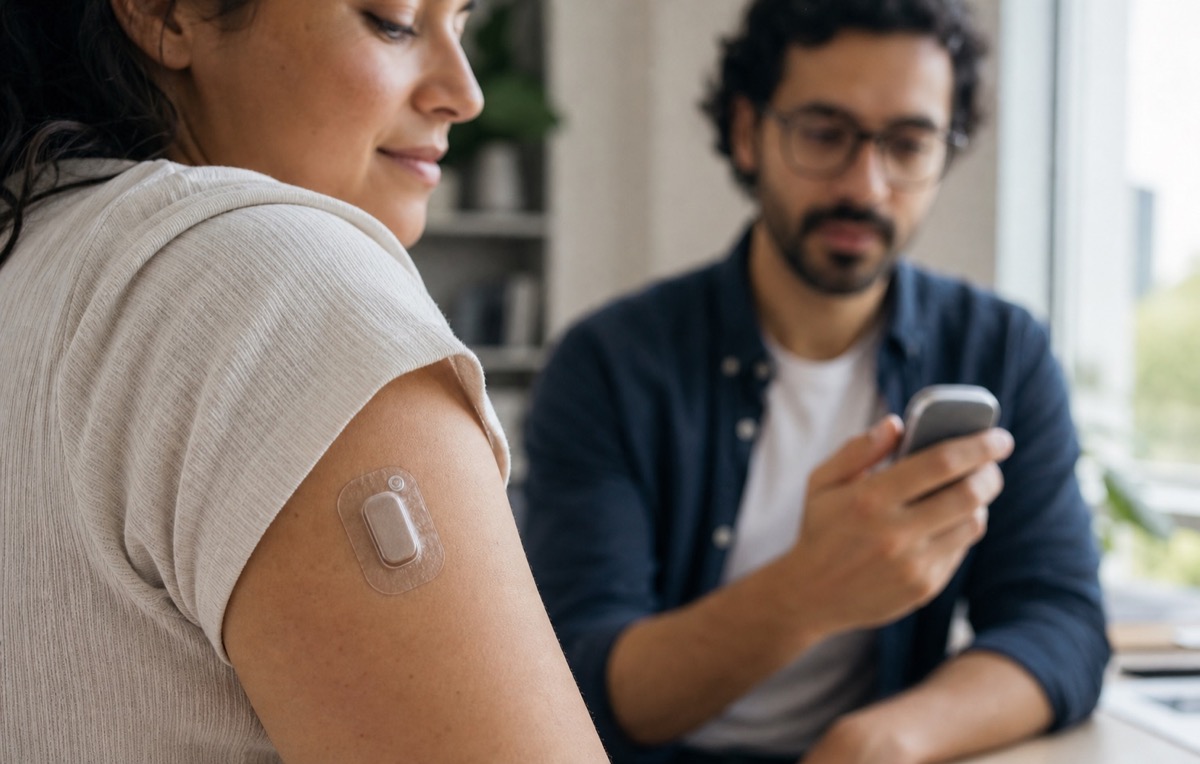
For decades, diagnostics has operated on a snapshot model. A patient visits a clinic, provides a sample, and receives results that reflect a single moment in time. But health is not static. It fluctuates hour by hour, influenced by activity, diet, stress, sleep, and countless biological rhythms.
Continuous biomarker tracking promises to replace these isolated snapshots with a living, breathing picture of health, one that evolves in real time.
From episodic to continuous
The shift from episodic to continuous monitoring is already underway. Continuous glucose monitors (CGMs) have transformed diabetes management by providing patients and clinicians with real-time glucose data, trend arrows, and predictive alerts. What was once a painful finger-prick ritual has become a seamless, always-on data stream.
The success of CGMs has sparked a broader question: what if we could continuously track not just glucose, but cortisol, lactate, inflammatory markers, hormones, and metabolic byproducts?
The biosensor revolution
Advances in biosensor technology are making this vision increasingly realistic. Microneedle patches, sweat-based sensors, interstitial fluid analyzers, and even smart contact lenses are being developed to measure a growing range of analytes non-invasively or minimally invasively.
These sensors leverage electrochemical, optical, and affinity-based detection methods, often combined with flexible electronics that conform to the body. The result is wearable devices that can monitor biochemistry without disrupting daily life.
AI and pattern recognition
Raw biomarker data is only useful if it can be interpreted. This is where artificial intelligence plays a critical role. Machine learning algorithms can identify clinically meaningful patterns in continuous data streams, distinguishing normal physiological variation from early warning signals.
For example, subtle changes in inflammatory marker trends might predict the onset of an infection days before symptoms appear. Shifts in hormonal patterns could signal metabolic dysfunction long before traditional lab tests would flag an abnormality.
Personalized baselines
One of the most powerful aspects of continuous tracking is the ability to establish personalized baselines. Rather than comparing a patient's results to population-level reference ranges, continuous data allows clinicians to detect deviations from that individual's own normal patterns.
This personalized approach is far more sensitive and specific than traditional diagnostics, enabling earlier intervention and more tailored treatment strategies.
Clinical applications
The clinical applications of continuous biomarker tracking are vast. In chronic disease management, it enables tighter control and fewer complications. In clinical trials, it provides richer endpoint data and reduces the burden on participants. In preventive health, it empowers individuals to understand and optimize their own biology.
Sports medicine, mental health monitoring, post-surgical recovery, and fertility tracking are all areas where continuous biomarker data is beginning to demonstrate real value.
Challenges and considerations
Significant challenges remain. Sensor accuracy and stability over extended wear periods need improvement. Data privacy and security are paramount when dealing with continuous streams of sensitive health information. Regulatory frameworks for continuous monitoring devices are still evolving.
There is also the risk of data overload, both for patients and clinicians. Effective continuous monitoring systems must include intelligent filtering and alerting to surface only actionable insights.
The path ahead
The future of diagnostics is not a single test at a single point in time. It is a continuous, intelligent, and deeply personal understanding of health. As biosensor technology matures, AI analytics improve, and clinical evidence accumulates, continuous biomarker tracking will become a cornerstone of modern healthcare.
At Dxplora, we are working with innovators at the forefront of this transition, helping them validate, scale, and bring continuous monitoring technologies to the patients who need them most.