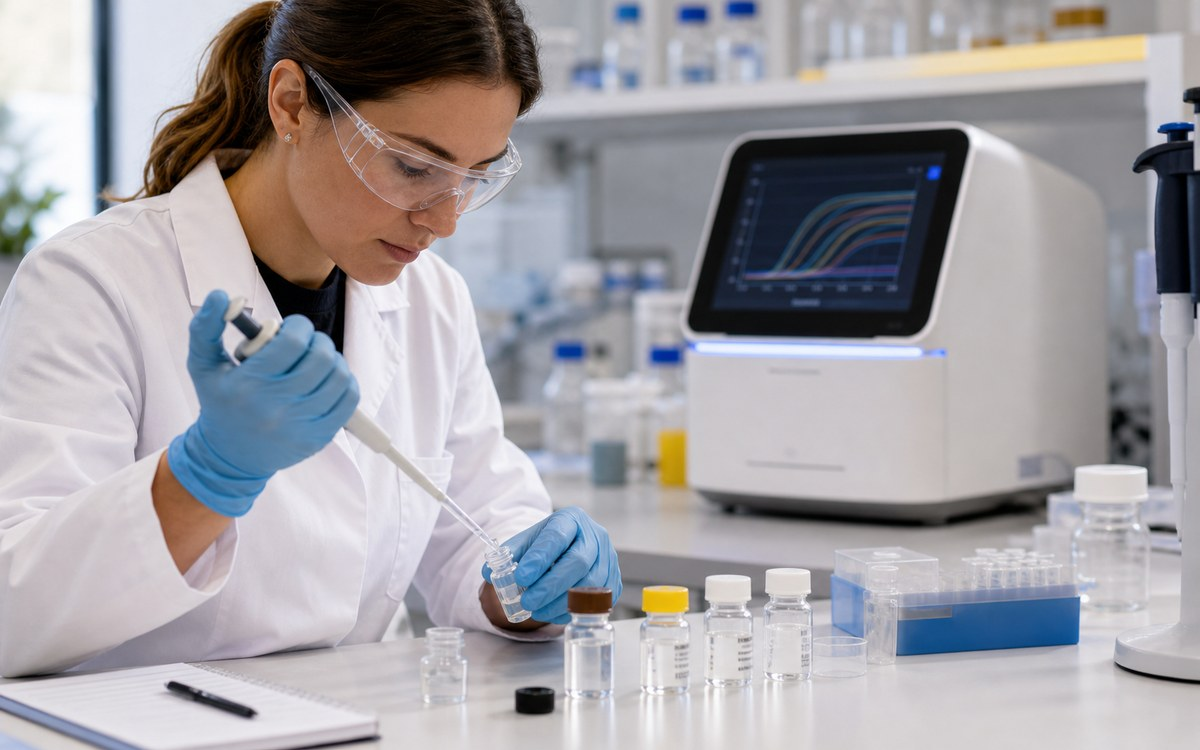
Custom PCR master mix development becomes relevant when available mixes cannot reliably support the target workflow, instrument, sample background, reaction speed, multiplex level, storage condition, or product format. The goal is not a universally superior mix. It is a controlled formulation that fits a defined assay system and can be produced repeatedly.
Confirm that the master mix is the limiting factor
Poor amplification can originate from oligonucleotide design, extraction, inhibitors, template quality, instrument settings, analysis, or operator handling. Compare the current assay across suitable reference chemistries and controls before beginning formulation work. A custom mix should address evidence, not absorb every unresolved variable.
Define the performance and workflow requirements
Document target type, PCR modality, reaction volume, cycling time, instrument, fluorophores, passive reference, matrix, extraction eluate, multiplex level, control strategy, setup steps, and storage objectives. Requirements that conflict should be prioritized rather than left for the formulation to solve simultaneously.
Develop components as an interacting system
Polymerase and hot-start mechanism, reverse transcriptase where applicable, buffer, magnesium, salts, dNTPs, stabilizers, enhancers, detergents, preservatives, and reference dye can influence one another. Screening should use the intended oligonucleotides and representative backgrounds so formulation choices reflect the actual assay.
Challenge robustness, not only the best run
A promising condition should be evaluated across operators, instruments or blocks where relevant, reagent holds, template levels, and representative interferents. The development team should understand how close the formulation operates to its failure boundaries before fixing a specification.
Plan the presentation and manufacturing process
Bulk liquid, aliquoted liquid, pre-dispensed reactions, and lyophilized formats create different mixing, filling, container, freeze-thaw, and packaging constraints. The product format may require formulation changes, so presentation decisions should enter before the chemistry is declared final.
Define evaluation and release criteria
Evaluation material should be compared with the approved development baseline using predefined controls and observations. Repeat production then needs raw-material specifications, mixing instructions, in-process checks, fill tolerances, release testing, storage, and change control.
Decide whether custom chemistry creates enough value
Custom development is most defensible when it enables a required workflow, improves reproducibility, reduces operational complexity, supports a chosen format, or creates a controllable supply path. If a commercial mix already meets the defined needs, a configured reagent kit may be the more efficient project.
Build a rational screening plan
Formulation experiments should vary a limited number of high-impact factors around a stable assay baseline. Include a reference mix, representative target levels, negative material, relevant matrix or extraction background, and predefined readouts. Screening only the strongest positive sample can select a chemistry that looks impressive but fails near the operating boundary. A documented experiment matrix also makes later transfer decisions easier to defend.
Translate the formulation into a supply specification
Once a candidate mix is selected, convert the experimental recipe into controlled raw-material attributes, concentration ranges, preparation order, in-process conditions, container, fill, storage, release checks, and change rules. The specification should also identify which assay-specific components remain separate. This step is what turns a promising formulation study into a reagent system that can be evaluated, manufactured, and reordered consistently.