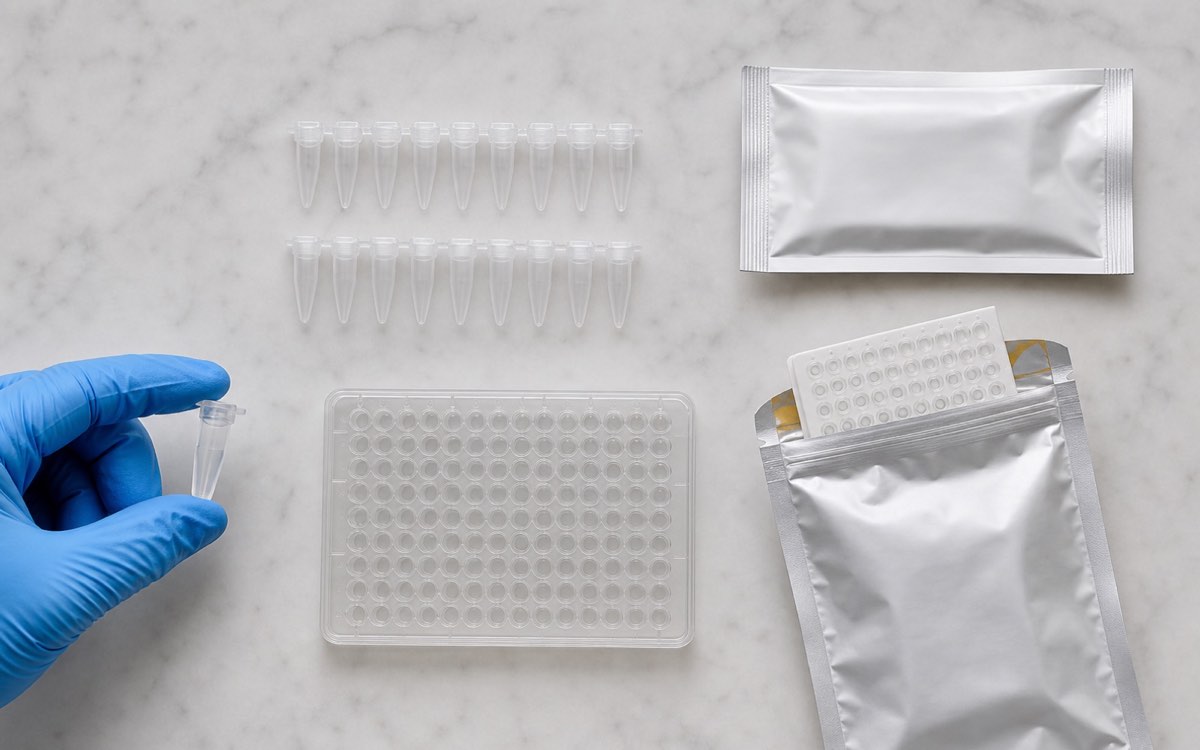
PCR packaging is part of the technical workflow. Individual tubes, connected strips, plates, and dry-pellet presentations change how material is filled, sealed, stored, shipped, opened, handled, and loaded into an instrument. The best format is the one that fits actual run behavior rather than the one that looks most finished.
Individual 0.2 mL PCR tubes
Individual tubes support flexible run sizes and simple distribution of single reactions or controls. They can increase handling and labeling effort and may be less efficient when laboratories consistently run repeated panels or larger batches.
Connected eight-tube strips
Strips balance flexibility with organized handling. They work well for small panels, repeat run sizes, or dry reagent pellets. Cap, optical, cutting, orientation, and instrument compatibility should be confirmed before the vessel becomes part of the product definition.
PCR plates
Plates suit larger batches and automation but can create waste when only a small portion is used. Plate profile, skirt, optical seal, well volume, instrument block, shipping protection, and the number of freeze-thaw or opening events matter to the final workflow.
Dry pellets and barrier pouches
A dry pellet can be presented in a tube, strip, plate, or cartridge. Moisture protection may require foil barrier material, validated seals, desiccant, controlled headspace, and a sensible number of reactions per pouch. Repeatedly opening a large pouch can defeat the intended protection strategy.
Controls may need a different presentation
Positive controls, internal controls, and other materials may have different stability, contamination, concentration, or handling needs than the amplification mix. Forcing every component into one package can make the workflow less robust rather than more convenient.
Select format with a use-case matrix
Compare instrument fit, reactions per run, setup steps, storage, shipping, open-package period, automation, waste, filling process, labeling, and forecast quantity. A short matrix turns an aesthetic preference into a documented design decision.