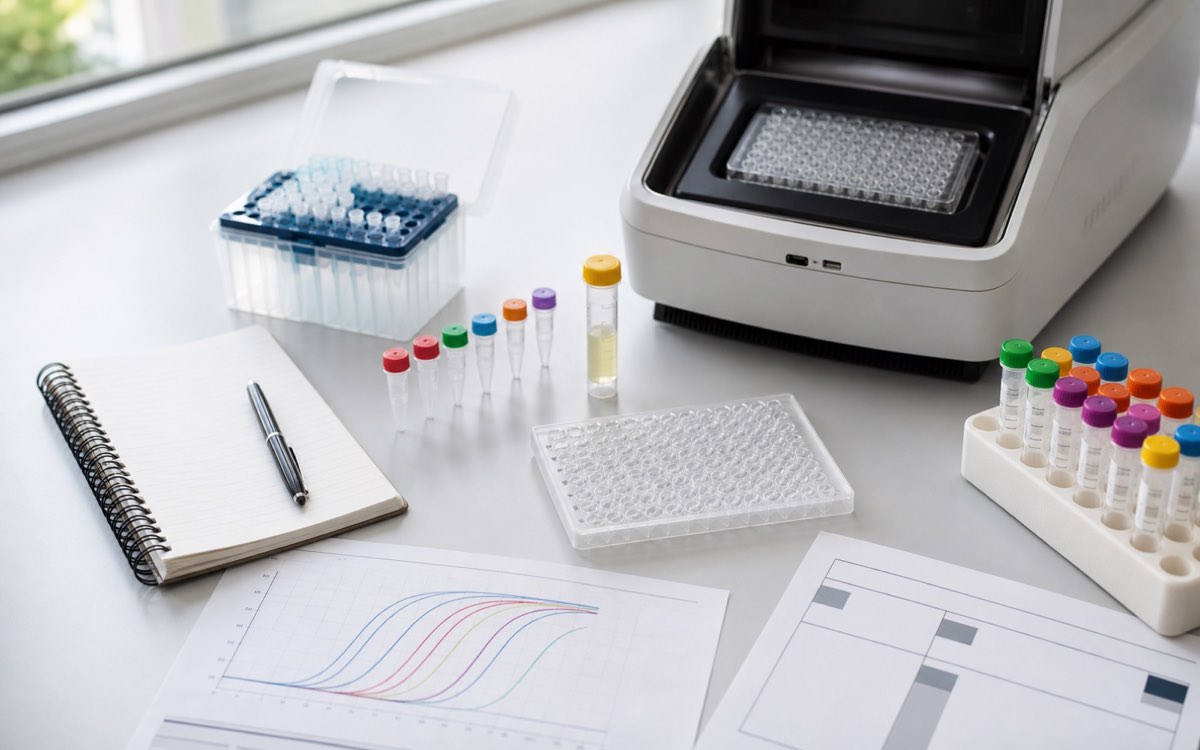
A custom PCR project can start from a target concept, an existing primer-probe set, or a functioning bench protocol. The fastest intake does not pretend every answer is known. It organizes what is known, marks the open questions, and defines what the next development stage should produce or decide.
Describe the target and intended workflow
State the target or targets, DNA or RNA context, sample matrix, extraction method, PCR modality, instrument, optical channels, reaction volume, and the setting in which the material will be evaluated. Avoid using a broad disease label as a substitute for technical target information.
Provide oligonucleotide and chemistry information
Include primer and probe sequences when available, purification, modifications, stock and working concentrations, current master mix or enzyme, buffer assumptions, passive reference, and any internal control. Identify information that is confidential so the correct handling can be arranged.
Share representative data
Provide raw and analyzed amplification files or exports, run conditions, replicate structure, controls, material identifiers, expected curve behavior, known variability, and failed conditions that informed the current method. Negative results can prevent repeated work when their context is clear.
Define the product-format goal
Explain whether the near-term need is a liquid evaluation mix, separated components, pre-dispensed tubes, a lyophilized strip, a plate, or a feasibility comparison. Include storage and shipping objectives, reactions per package, setup steps, and instrument compatibility.
Estimate quantities and timing
Give a range for evaluation reactions, pilot quantity, expected future demand, desired review dates, and any sample or instrument constraints. A range is more useful than an artificial exact forecast during early development.
Define the next decision
The brief should end with the decision the project must support: confirm feasibility, compare chemistries, balance a multiplex, transfer a bench method, assess lyophilization, select a package, produce evaluation material, or plan repeat supply. This keeps the first scope focused.